Book your brake check online in a few minutes and pick a time that suits you, with no upfront charge.
Brakes making a noise? Here’s what it means
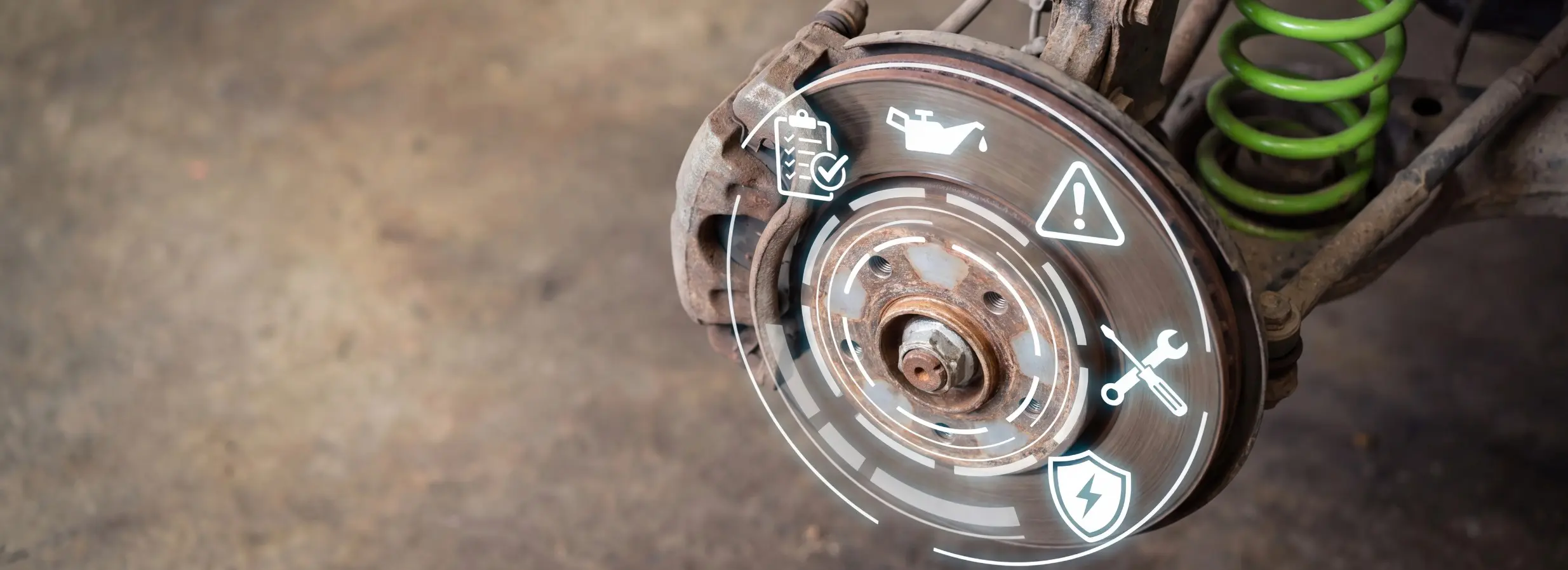
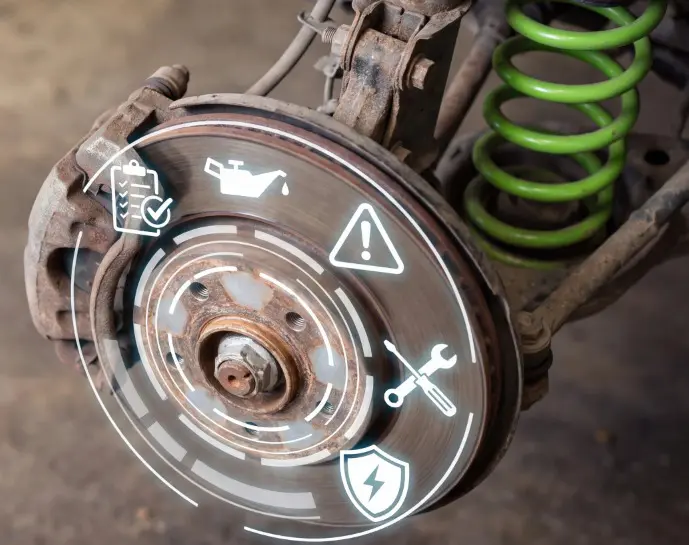
Most car brake problems show up as a noise first. A squeal usually means your brake pads are getting low, a grinding noise when braking often means they’re worn down to the metal, and a scraping or rubbing sound can point to a seized brake caliper or a stone caught behind the disc. Your brakes are your most important safety feature, so any new noise is worth getting checked quickly.
Don’t worry if you’re not sure what’s wrong. Book a brake check at an AA Car Service Centre near you, tell us what you’re hearing, and we’ll take it from there. If the car pulls to one side, the pedal feels soft or a brake warning light comes on, stop driving and call for help.
Why get your brakes fixed with the AA
A brake noise can come from the pads, discs, calipers or something caught in the wheel. Our mechanics inspect your brakes properly to find which, so you’re not paying to fix the wrong part.
We’ll tell you what’s wrong and what it costs before we start. If we find anything else, we’ll call you first.
The AA has looked after drivers in Ireland for more than a century, from roadside rescue to servicing and repairs at our own AA Car Service Centres.
All our work comes with a 12-month warranty on parts and labour.
How does brake repair work at AA Car Service Centre?
-
Book your brake check online with no upfront charge.
-
We’ll ask for your Eircode to make sure we get you into the nearest AA Car Service Centre.
-
We test drive and inspect your car to find the fault. Then we tell you what’s wrong and what it’ll cost. Nothing goes ahead until you say yes.
-
Every job is carried out to our trusted AA standards, and all parts and labour come with a 12-month warranty for extra peace of mind.
What causes car brake problems?
Most pads have a small metal tab that squeals against the disc when they get low. That squeal is the classic bad brake pad noise, and it’s meant to be annoying. If you ignore it, the pad wears to its metal backing plate, and you’ll hear a grinding sound while braking as metal scrapes on metal. That damages the discs too, so the repair costs more.
Discs wear thin over time and can develop a rusty lip on the outer edge. Grooved or uneven discs can cause noise and a vibration through the pedal or steering wheel when you brake.
The caliper squeezes the pads onto the disc. If its piston seizes, the pad stays pressed against the disc after you let go of the brake. You’ll usually hear a rubbing noise, smell burning and feel the car pull to one side. A caliper stuck on the disc like this can overheat the brake and wear the pad out fast.
Many calipers slide on two pins so the pads wear evenly. When the rubber boots split, water gets in, the grease washes out and the pin seizes. The caliper can’t move freely, so one pad drags or wears much faster than the other.
The bracket holds the pads in place. Rust builds up where the pads sit, and the pads can stick in the bracket instead of sliding back. In bad cases the bracket bolts seize too. Cleaning the bracket and fitting new pad clips usually sorts it.
Cars left standing, especially through a damp Irish winter, can rust enough for the pads to stick to the discs or the handbrake to seize on. If the car won’t move freely or you hear a loud crack as it frees itself, have the brakes checked.
Cars left standing, especially through a damp Irish winter, can rust enough for the pads to stick to the discs or the handbrake to seize on. If the car won’t move freely or you hear a loud crack as it frees itself, have the brakes checked.
AA Service Centre Locations
Unit 3, Belgard Industrial Estate, Mayberry Rd, Tallaght, Dublin, D24 VK11
Phone: (01) 567 7813
Opening Hours:
- Monday 8 a.m.–5 p.m.
- Tuesday 8 a.m.–5 p.m.
- Wednesday 8 a.m.–5 p.m.
- Thursday 8 a.m.–5 p.m.
- Friday 8 a.m.–5 p.m.
- Saturday Closed
- Sunday Closed
Unit 1002, Gateway Business Park, New Mallow Rd, Commons, Cork, T23 TW62
Phone number (021) 204 4002
Opening Hours:
- Monday 8 a.m.–5 p.m.
- Tuesday 8 a.m.–5 p.m.
- Wednesday 8 a.m.–5 p.m.
- Thursday 8 a.m.–5 p.m.
- Friday 8 a.m.–5 p.m.
- Saturday Closed
- Sunday Closed
Unit 4, Rosmadda Business Park, Rosmadda Business Park, Ballysimon, Limerick, V94 V2T9
Phone: (061) 517 131
Opening Hours:
- Monday 8 a.m.–5 p.m.
- Tuesday 8 a.m.–5 p.m.
- Wednesday 8 a.m.–5 p.m.
- Thursday 8 a.m.–5 p.m.
- Friday 8 a.m.–5 p.m.
- Saturday Closed
- Sunday Closed
Unit 17D/17E, Newbridge Industrial Estate, Athgarvan Rd, Kilbelin, Newbridge, Co. Kildare, W12 NP40
Phone: (045) 833 936
Opening Hours:
- Monday 8 a.m.–5 p.m.
- Tuesday 8 a.m.–5 p.m.
- Wednesday 8 a.m.–5 p.m.
- Thursday 8 a.m.–5 p.m.
- Friday 8 a.m.–5 p.m.
- Saturday Closed
- Sunday Closed
Opening Hours:
- Monday 8 a.m.–5 p.m.
- Tuesday 8 a.m.–5 p.m.
- Wednesday 8 a.m.–5 p.m.
- Thursday 8 a.m.–5 p.m.
- Friday 8 a.m.–5 p.m.
- Saturday Closed
- Sunday Closed
Frequently Asked Questions (FAQs) for Car brake problems
The most common reason is the wear indicator on your brake pads touching the disc, which means the pads are getting low. Glazed pads, brake dust or loose pad clips can also cause a squeal. If it happens every time you brake, book a brake check before the pads wear down further.
A light squeak for the first few stops after rain, a car wash or a night parked outside is usually surface rust on the discs. It’s normal and should clear within a few stops. If the squeak carries on all day, the pads or calipers need checking.
A grinding noise when braking usually means the pads have worn through to the metal backing plate, which is now scraping the disc. It can also be a stone caught behind the disc. Grinding brakes need checking straight away. Stop driving if you can, as braking power may be reduced.
A scraping noise often comes from a stone trapped between the disc and the dust shield, or a bent dust shield touching the disc. It can also be pads worn to the metal. If the scraping stays when you’re not braking, a stuck pad or seized caliper is likely.
A rubbing noise that carries on after you let go of the brake usually means a pad is still touching the disc. A seized caliper or caliper pin is the most common cause. You may also notice a burning smell or the car pulling to one side. Book a check before driving far.
Look for the car pulling to one side, a burning smell or smoke from one wheel, a constant rubbing noise, and one wheel much hotter than the others. You may also notice worse fuel economy or the car feeling sluggish. Don’t touch the wheel, as it can be very hot.
Corrosion is the main cause. Water gets past split rubber boots into the caliper piston or slider pins, and rust stops them moving. Cars that stand for long periods, and road salt in winter, make it more likely. Regular brake checks help catch worn boots before the caliper seizes.
It depends on the noise. A brief squeak after rain is fine. A constant squeal means book a check soon. Grinding, the car pulling to one side, a soft pedal or a brake warning light mean you should stop driving and call for help, because your brakes may not work properly.
It depends on the fault and your car. Freeing a stuck pad or removing a stone is a small job. New pads, discs or a replacement caliper take longer, and fixing pads early usually avoids paying for discs as well. We’ll give you a price before we start any work.
You can get your brakes checked at any of our AA Car Service Centres in Dublin, Cork, Limerick, Newbridge and Sligo. Enter your Eircode when you book online and we’ll match you to your nearest centre. All our centres are open Monday to Friday, 8am to 5pm.